
Announcing AMD - Nav2 Gold Sponsor
Advancing Open-Source Robotics: AMD Becomes Strategic Sponsor of Nav2 to Drive Scalable, High-Performance Navigation
Open Navigation is excited to announce a new collaboration with AMD, a global leader in high-performance and adaptive computing technologies. AMD has become a strategic sponsor and Gold Sponsor to support and advance the Nav2 stack — the open-source navigation framework deployed by over 300 companies worldwide in production. The growing AMR robotics and embedded portfolio including adaptive SoCs, FPGAs, AMD Ryzen™ Embedded CPUs, and Radeon™ GPUs uniquely positions the company to drive innovation at the intersection of hardware acceleration and autonomous navigation.
Nav2 has become a cornerstone for autonomous mobile robots (AMRs) and service robots built on the ROS 2 ecosystem. From research labs to industrial deployments, Nav2 enables robots to move intelligently through complex environments — planning, controlling, and navigating with flexibility and reliability. This sponsorship will help Open Navigation enhance performance, scalability, and real-time capabilities across a diverse range of compute platforms from edge devices to high-performance embedded systems for the entire mobile robotics industry.
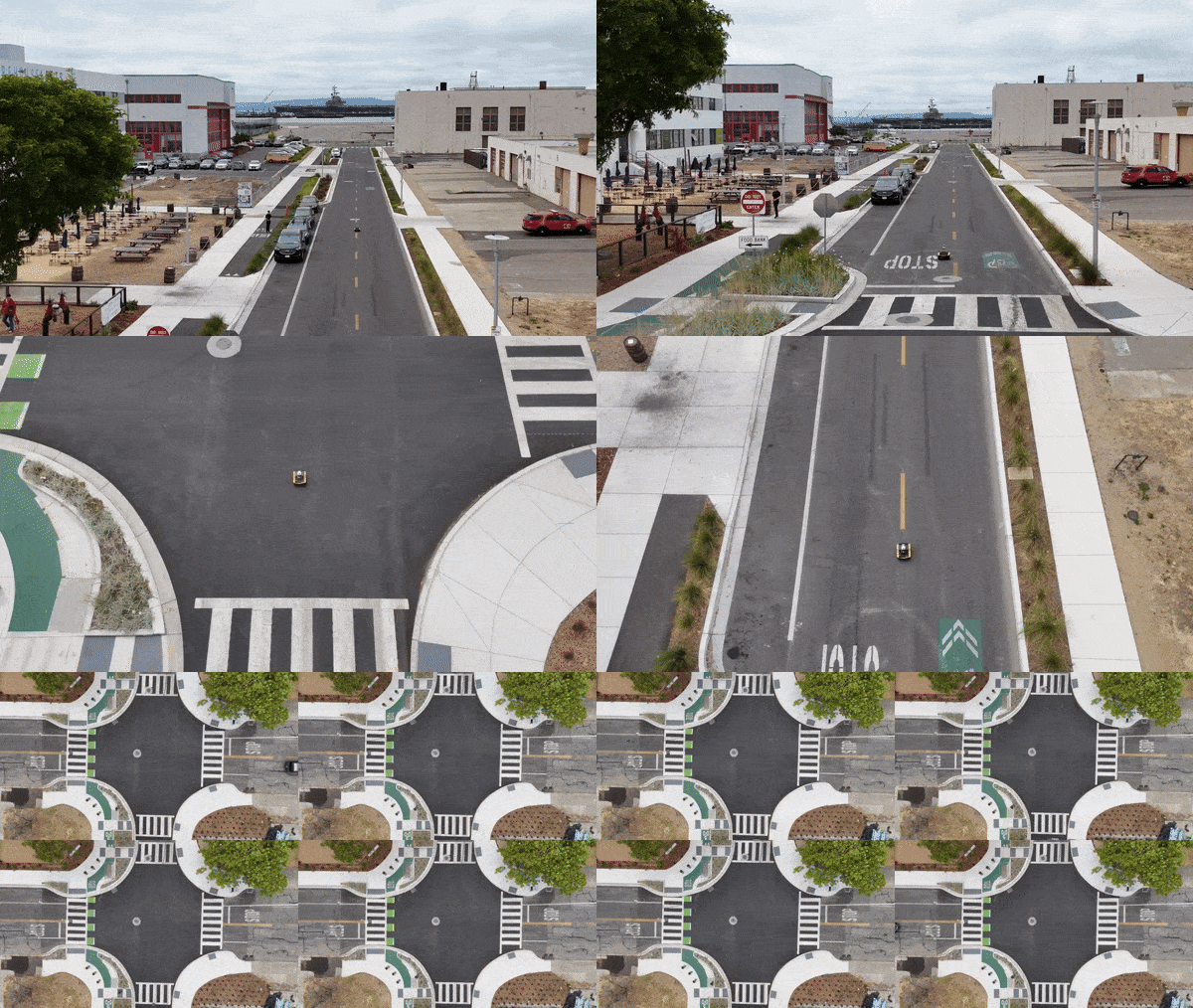
AMD supported technology demonstration showcasing Ryzen AI-powered autonomy using ROS 2, Nav2 performing real-time 3D urban mobility.
Through this engagement, AMD will collaborate closely with the Open Navigation community to:
Optimize Nav2 performance for AMD adaptive SoCs, FPGAs, CPUs, and GPUs.
Enable hardware-accelerated path planning and sensor fusion, leveraging the parallel compute capabilities of AMD devices.
Contribute to open-source development, ensuring that next-generation robots can deploy Nav2 efficiently across heterogeneous compute platforms.
Support long-term sustainability of Nav2 through dedicated engineering and ecosystem contributions.
As a sponsor, AMD joins a growing network of organizations investing in the open-source robotics ecosystem. This collaboration reinforces the shared vision of building accessible, high-performance navigation frameworks for robots of all shapes and sizes from research prototypes to commercial deployments.